


A home for wisdom and inspiration to support the next generation of independent doctors
Sign up to receive a monthly e-mail when new versions of the website are published. Thank you for being a part of my early community.

Lorem ipsum dolor sit amet, consectetur adipiscing elit. Sed in accumsan massa, a tempor nisl. Nulla id sollicitudin velit, ut laoreet augue. Vivamus non felis sed massa hendrerit accumsan non nec dui.
Questions and Answers:
Question 1: Proin aliquet orci a turpis ultricies, non fermentum felis congue.
Answer: Proin aliquet orci a turpis ultricies, non fermentum felis congue.
Question 2: Proin aliquet orci a turpis ultricies, non fermentum felis congue.
Answer: Proin aliquet orci a turpis ultricies, non fermentum felis congue.
Question 3: Proin aliquet orci a turpis ultricies, non fermentum felis congue.
Answer: Proin aliquet orci a turpis ultricies, non fermentum felis congue.
Question 4: Proin aliquet orci a turpis ultricies, non fermentum felis congue.
Answer: Proin aliquet orci a turpis ultricies, non fermentum felis congue.
Question 5: Proin aliquet orci a turpis ultricies, non fermentum felis congue.
Answer: Proin aliquet orci a turpis ultricies, non fermentum felis congue.
Question 6: Proin aliquet orci a turpis ultricies, non fermentum felis congue.
Answer: Proin aliquet orci a turpis ultricies, non fermentum felis congue.
Questions and Answers:
(1) What is the book (or books) you’ve given most as a gift, and why?
For anyone who seeks healing or is tasked with healing another, here is an alternative Rx pad . . . a book of poetry: The Poetry Remedy, Prescriptions for the Heart, Mind, and Soul (William Sieghart). On the back of the book it says, “Sometimes only a poem will do. These poetic prescriptions and wise words of advice are tailored to those moments in life when we need them most. Whatever you’re facing, there is a poem in these pages that will do the trick, offering delight, reflection, and that essential realization that poetry makes so powerful: I’m not the only one who feels like this.”
Truly, there is a poem for every ailment – even if sutures or chemo are also involved, poetry is an often-overlooked balm. Don’t you overlook how important poetry is, for you may find you need the balm as much as any patient does. (And if you want/need guidance on how to approach poetry because you had a class once that made you think “ugh, not for me,” check out the YouTube Video The Power of Poetry. It’ll help a lot.)
(2) What advice would you give to a smart, driven person (student or trainee) about to enter the “real world” of taking care of patients? What advice should they ignore?
The system sucks, but you don’t have to. Lots of us (patients and doctors, alike) suffer in the face of what the “system” has to offer (or doesn’t). The system reflects various histories of how we see each other and what we believe is health or wellbeing. But here’s the thing: No individual person is particularly good or evil. We aren’t good people or bad people. Most of us have good moments and bad moments, but they don’t define us or our value.
Victor Frankl (a holocaust survivor who wrote “Man’s Search for Meaning” and modeled compassion in psychiatry) said that one of the very few moments where human beings can act on wisdom is that moment (sometimes as brief as a flash of light) between stimulus and reaction. You know that moment, the one where a loud noise makes you jump or someone says that awful racist thing. Between the noise or the awful utterance, you have a moment to stop your reactive self and be your wise self. Medical training sometimes teaches you to forego that moment and go with your training, and that’s probably a good thing. On the other hand, you need to decide when to set training aside and open the moment to wisdom.
You have choices. You can practice taking an instant between stimulus and reaction to assess—is this a time to slow down and deliberate? Asking that question is the beginning of wisdom.
My advice to you is to seek wisdom and learn how to be wise in your choices and actions.
(3) What are bad recommendations you hear in your profession or area of expertise?
Ahhh, well, I don’t think anyone really offers bad advice—just like no one intends to be a doctor who treats people badly. I think I’d just say, it’s best to consider where any advice is coming from. Is it coming from someone who knows you? This is the thing that I believe: To be loved is to be called to be your best self. Someone who knows you—your strengths, what your best self is capable of, what you value, and so on—will see when you are struggling with heartache or jealousy or weariness, and they will offer you advice on how to use your strengths to overcome the urge to give in to impulses that you won’t be proud of later.
Don’t think of advice as good or bad; just ask yourself if this advice serves you as you seek to be your best self.
(4) What qualities do you appreciate and admire most in a doctor? Or in others, in general?
I appreciate collaboration with my doctor and kindness. Some doctors think that because they have studied the human body that they know my human body. But actually a good doctor/patient relationship begins when we recognize that I don’t know the general, abstract human body, and the doctor doesn’t know my particular human body. But when we share info about what we are each experts about, well, then we can work out what’s working and not.
(5) What wrong assumptions do others often make about you (this could be doctors, colleagues, family members, or people, in general)?
I think in this day and age (opposed to the long ago past when I was young or the distant future when you will no longer be young), there is a widely held belief that if someone knows my positionality and identity that they know me.
Things like racial identity, economic status, gender, profession, etc. are all pretty important, and they shape different parts of how I show up or how I understand the world around me. But much more of how I show up and understand things is shaped by the quirky life trajectory that has brought me here.
To be white is one thing, but to be white and raised in a family of anti-racism activists makes whiteness into something quite different from someone raised in a seemingly benign but racially segregated community. Both are white . . . but . . .
Things like humor and equanimity come from hard knocks but also from experiences of love; being taller or shorter can change how one approaches romance; a love of ice cream can spring from happy childhood memories or from misery that can only be calmed by sweet, sweet things.
And some days I am cranky and other days I’m sanguine—such shifts in mood can be driven by an event or by changes in sleep which can be influenced by neighbors arguing or an impending wedding.
I’m just saying we are all complicated beings. No one really knows anyone else because we are always influenced by something unseen. That’s all.
(6) What matters to you now that didn’t used to, or vice versa? Why?
Hmmm. I guess I don’t worry about being too wordy . . . but that could be self-evident, now couldn’t it?
Originally written in French. To read in French, close this box, scroll up
to the top of the browser, and click “FR” to translate the website into French.
Questions and Answers:
In response to this series of questions
I decided to start the answers in a different order
(4) What qualities do you appreciate and admire most in medical colleagues? Or in others, in general?
The most valuable qualities are surely intellectual honesty, which allows us to establish the benchmarks and limits of medical skills and never underestimate or overestimate ourselves.
Then it is the courage to face difficult cases and perseverance, as well as openness, and never missing an opportunity to discuss in a medical committee and have a collective decision.
(5) What wrong assumptions do people often make about you (this could be patients, colleagues, family members, or people, in general)? (6) What matters to you now that didn’t use to, or vice versa? Why?
Once the medical procedure, whether diagnostic or therapeutic, is decided with all our conviction and all clarity, scrupulously following the recommendations and in all honesty and well explained to the patient and his family.
In general this act will be well understood and well accepted as being the best
The opinions of others then don’t matter
Criticism and slander can never be avoided and it always comes from ignorant or jealous people.
Or bad
We don’t have to answer it or make a big deal about it because we gave the maximum of ourselves with all our conviction and our knowledge.
This requires very continued updating throughout our period of activity.
Because as a practitioner or specialist in our well-defined fields we are supposed to always provide the maximum of skills and attention to our patients.
To deserve and never betray their trust
Once we have given the maximum of ourselves
Life and death are states that will no longer be in our power
But it is that of the creator
The end of life must be accepted
And sometimes not going beyond reasonable possibilities to fall into relentlessness
What the bad tongues who only have criticism and stupidity will say is not our responsibility.
(2) What advice would you give to a smart, driven student or trainee about entering the “real world” of taking care of patients? What advice should they ignore?
Entering the medical world
1/life is sacred but it has its limits
2/the competence of each of us must always be delimited and never cross the limits
If outside our skills know how to hand over to the best people than us
3/intellectual honesty is the essential quality
No fabrication, no dissimulation, no falsehood and always the truth
4/medicine is learned and cultivated every day, and we are never up to date with knowledge, we must set it as a cardinal rule
And always share experiences with others
5/each patient is a particular case with his pathology, his whole life, his family, his own psychology
Always very attentive!!!
(3) What are bad recommendations you hear in your profession or area of expertise?
The most dangerous practitioners
Will always be the least honest
Toward patients
Regarding pathology
Towards themselves by overestimating themselves
(1) What is the book (or books) you’ve given most as a gift, and why? Or what are one to three books that have greatly influenced your life?
There is no medical book
But multiple books
Questions and Answers:
(1) What is the book (or books) you’ve given most as a gift, and why? Or what are one to three books that have greatly influenced your life?
One book that has greatly influenced me is “The Dance of Life: The Other Dimension of Time” by Edward T. Hall. I read it as a sophomore or junior in college and it made me realize that time is a fully social construction and that it plays an out-sized role in our quality of life. So if it’s socially constructed, then we can reconstruct it to better support our lives. It changed the entire trajectory of my life.
There have been many many others that followed, but on a personal level the next two books would be “A New Earth” by Eckhart Tolle (because it made me realize that the voice in my head wasn’t me) and “The Gift of Fear” by Gavin DeBecker (because it made me realize that my intuition was a powerful tool for living).
(2) What advice would you give to a smart, driven student or trainee about to enter the “real world” of taking care of patients? What advice should they ignore?
I’m not a doctor so this is not medical advice, but I would ask them to remember that in every patient interaction that visit might be one of the most important moments of their lives. It is mundane yet each interaction is also epochal–there will never be another quite like it full of the possibilities it holds.
(3) What are bad recommendations you hear in your profession or area of expertise?
Bad recommendations in my profession are suspicious of students and don’t grant them basic courtesies that we would to most anyone else.
(4) What qualities do you appreciate and admire most in a doctor? Or in others, in general?
The qualities I appreciate and admire most in a doctor begin with presence and generosity of spirit. This is followed quickly by a combination of humility and conscientiousness: This combination is reflected in something one of my favorite doctors once said, “I always like to remain skeptical of my diagnosis.” He was a brilliant, kind doctor that my entire family will always remember fondly at likely the worst moments in our lives.
(5) What wrong assumptions do others often make about you (this could be doctors, colleagues, family members, or people, in general)?
I think MDs might assume they know more than I do about my own and my family’s health. They might. But they might not. The more likely truth is that we would be great at collaborating to improve our health outcomes because I live in my body and I pay close attention to it.
(6) What matters to you now that didn’t used to, or vice versa? Why?
It matters to me that my own needs are met, even if it makes others uncomfortable. I spent much of my life attending to others’ needs and later realized that it isn’t my job. My job is to take care of myself and my needs.
Questions and Answers:
(1) What is the book (or books) you’ve given most as a gift, and why? Or what are one to three books that have greatly influenced your life and/or medical practice?
Books like “Arrowsmith” and “Cutting for Stone” reliably depict medical practice, but that’s only one slice of the world we actually inhabit. I needed a wider angle lens, so have relied on a panorama of authors, including Billy Collins, Howard Zinn, Margaret Atwood, and the almost criminally irreverent cartoonist, R. Crumb.
I recommend to my doctor friends “Rockefeller Medicine Men” by E. Richard Brown (U. of CA Press, 1979). It’s a history of the Flexner Report, which modernized and scientized medicine. We’ve derived terrific benefits from the change, but not everyone applauded it. Luminaries like Sir William Osler predicted that seeing patients as soluble objective problems would dehumanize healthcare. Was he right?
(2) What advice would you give to a smart, driven student or trainee about to enter the “real world” of taking care of patients? What advice should they ignore?
A top-tier medication, right up there with opiates and antibiotics, is personal contact, which is more than sitting at the patient’s level and speaking correct words. Empathy is a visceral challenge, a genuine attempt to feel what the patient feels.
You can’t know another more deeply than you know yourself, so my advice is to devote serious time toward that end. Meditate, write, seek a mentor and supportive friends–i.e., those who can tell you what you don’t want to hear.
(3) What are bad recommendations you hear in your profession or area of expertise?
As Gandhi advised, “Always do the right thing, even if the authorities forbid it. Never do the wrong thing, even if the authorities require it.”
(4) What qualities do you appreciate and admire most in medical colleagues? Or in others, in general?
Above all, kindness. And humor, honesty, comfort with uncertainty, humility, curiosity, and mindful deliberation.
(5) What wrong assumptions do people often make about you (this could be patients, colleagues, family members, or people, in general)?
People can assume that as an MD, I know more than I actually do. When my kids ask me a medical question, I often reply that I don’t know. “What kind of a doctor are you, then?” they ask. “You don’t seem to know much.” I don’t have an answer for that.
People also assume doctors are rich. Ha.
(6) What matters to you now that didn’t used to, or vice versa? Why?
What matters most to me is warm, intimate, comfortable relationships with friends and family. As I age, I realize I’m both more and less patient. More patient when I’m engaged in anything, and less patient with crowds, noise, the fast lane, and loquacious narcissists.
Learn more about Dr. Ellahi at his LinkedIn page and contact him at mateen.ellahi@nhs.net.
Questions and Answers:
(1) What is the book (or books) you’ve given most as a gift, and why? Or what are one to three books that have greatly influenced your life and/or medical practice?
This Is Going to Hurt by Adam Kay – for its candid, humorous, and eye-opening look at the realities of working in medicine, especially as a junior doctor. It’s a great way to prepare for the emotional and physical challenges while also highlighting the importance of humor in coping with the stresses of healthcare.
(2) What advice would you give to a smart, driven student or trainee about to enter the “real world” of taking care of patients? What advice should they ignore?
Focus on building strong relationships with patients; clinical knowledge is important, but empathy and communication are key. Ignore the notion that “the patient’s story” doesn’t matter – it often reveals the diagnosis.
(3) What are bad recommendations you hear in your profession or area of expertise?
“Do everything yourself.” Delegation is crucial in healthcare. Another bad one is “always follow protocols exactly” – while guidelines are important, individualized care is essential for good outcomes.
(4) What qualities do you appreciate and admire most in medical colleagues? Or in others, in general?
Integrity, teamwork, and the ability to listen. Humility and a continuous desire to learn are also vital qualities that make someone a great colleague in the medical field.
(5) What wrong assumptions do people often make about you (this could be patients, colleagues, family members, or people, in general)?
That I’m always available or that I have a clear answer to every situation. As a GP partner, I’m often managing multiple responsibilities, so my time and focus may not always be as immediate as expected.
(6) What matters to you now that didn’t used to, or vice versa? Why?
Work-life balance. As my career has progressed, I’ve learned the importance of taking time for myself to stay energized and provide the best care. This wasn’t as clear in the early years.
Questions and Answers:
(1) What is the book (or books) you’ve given most as a gift, and why? Or what are one to three books that have greatly influenced your life?
A book I have started to recommend to folks is “Consolations” by David Whyte. The format of it is interesting, short little chapters on the meaning of a particular word like “Alone” or “Beauty”, but as a whole it is about some considerations of how we might approach this precious life we have with a bit more curiosity and awareness. I keep coming back to it again and again, it is something that I try to reread every few months. Even if you only have five minutes, you can read a chapter, and then let that particular idea soak in for the rest of the day.
(2) What advice would you give to a smart, driven student or trainee about to enter the “real world” of taking care of patients? What advice should they ignore?
I’m not a clinician, so I’ll answer this a bit more generally, from the perspective of a researcher. I think that training is really focused on an individual and your ideas and developing your own skillsets, but in the real world you need to focus much more on working together with other people, working in teams, delegating things, doing tasks for other people. If that comes naturally to you that is great, but if you went into medicine or medical research at least in part because you liked that individual intellectual pursuit, spend some time prioritizing the parts of the day where you are interacting with others.
(3) What are bad recommendations you hear in your profession or area of expertise?
This is such a good question and also so tough, because I think folks giving bad advice have the best intentions. So for me this question brings up the idea of how strongly to hold on to advice from others. Perhaps the best advice is hold all advice lightly, and focus on thinking about why it worked for that person, and realize that what works well for other people might not work well for you. I think back to advice I was given, where that advice, for example, was great for 80% of the people out there (e.g. be very specialized in your academic work), but wasn’t something that was a fit for the way my brain works. I spent way too long trying to force myself into that mold of the modal researcher, but eventually found mentors that didn’t do that, and realized that I could actually have a bigger impact because I was able to do things that were unique.
(4) What qualities do you appreciate and admire most in doctors and medical colleagues? Or in others, in general?
I most admire people who are thoughtful and intentional in their approach to their work, but hold their own knowledge lightly.
(5) What wrong assumptions do people often make about you (this could be doctors, colleagues, family members, or people, in general)?
One big misconception about academic researchers is that we just want to publish for the sake of publishing. I really don’t meet many researchers that only care about that! Most of the researchers I know are motivated by a deep desire to improve human health and well-being. We just see things a few steps upstream, we see in many cases a complex system of problems that need to be addressed, and try to work backwards a few steps to see what information might be needed to improve health.
(6) What matters to you now that didn’t used to, or vice versa? Why?
I have come to have a deep respect for all of the different ways people are working to improve health and well-being, professionally and personally, and across ideologies and across sectors. We all have important parts to play in that mission.
Questions and Answers:
(1) What is the book (or books) you’ve given most as a gift, and why? Or what are one to three books that have greatly influenced your life?
The one book that I really enjoyed reading recently is called Good People, Stories from the Best of Humanity (UpWorthy). My daughter gave it to me to provide hope for me in this chaotic world right now.
(2) What advice would you give to a smart, driven student or trainee about to enter the “real world” of taking care of patients? What advice should they ignore?
Listen to the patient! Assume nothing, everyone is on a different journey, their past and present are unique, yes, guidelines are important to follow and based in science which is important, but bring humanness into each interaction. And, because I work in the world of sleep health, make sleep inquiry an always event! Don’t forget what happens at night influences just about everything.
(3) What are bad recommendations you hear in your profession or area of expertise?
I actually don’t hear a lot of bad recommendations, my field is pretty good at trying to get folks to have good, quality and quantity of sleep.
(4) What qualities do you appreciate and admire most in a doctor? Or in others, in general?
Human kindness, a smile, a listen. I walk every morning (my circadian reset) and I say good morning to everyone, I don’t think everyone likes it, but it’s what I do.
(5) What wrong assumptions do others often make about you (this could be doctors, colleagues, family members, or people, in general)?
I volunteer for an organization, and I think sometimes they think I am too bossy, but it seems like if I am not, nothing much gets done. It gets frustrating.
(6) What matters to you now that didn’t used to, or vice versa? Why?
Well, a good question. While at this point in my life, I am not looking towards career, so it becomes less having to always prove myself, now I just like what I do, working part time as a consultant/contractor, and now looking towards retirement. How will my life be impacted etc… spending more time doing the things I want to do such as travel
I volunteer a fair amount, so I like that, and given the current situation in the US, I am using my time to be more politically active, trying not to feel powerless, but realizing I do have power, there is power in numbers.
Questions and Answers:
(1) What is the book (or books) you’ve given most as a gift, and why? Or what are one to three books that have greatly influenced your life and/or medical practice?
The book I have bought most for students in my class “Medical Humanities and the Arts” is the graphic novel “Mom’s Cancer” by Brian Fies. It is the wonderfully illustrated and told story of Brian’s mother as she gets diagnosed and treated for small cell lung cancer. The book deftly weaves humor, sadness, and family insights on her journey.
(2) What advice would you give to a smart, driven student or trainee about to enter the “real world” of taking care of patients? What advice should they ignore?
Don’t forget that patients and doctors are human beings first!
(3) What are bad recommendations you hear in your profession or area of expertise?
I think there is an endless list of medical misinformation and disinformation out in the world. We all (myself included) can do a better job evaluating what we hear and believe in health care.
(4) What qualities do you appreciate and admire most in medical colleagues? Or in others, in general?
Kindness, kindness, kindness.
(5) What wrong assumptions do people often make about you (this could be patients, colleagues, family members, or people, in general)?
Hmm, don’t know.
(6) What matters to you now that didn’t used to, or vice versa? Why?
I have a greater appreciation for the role of hope in my life and my patients’ lives.
Questions and Answers:
(1) What is the book (or books) you’ve given most as a gift, and why? Or what are one to three books that have greatly influenced your life and/or medical practice?
I have given away mostly copies of my own first book, A Country Doctor Writes: CONDITIONS, diseases and other life circumstances. Second on that list is HE, understanding masculine psychology by the Jungian therapist Robert A Johnson. That one is really helpful for men to understand themselves and the male psychology.
(2) What advice would you give to a smart, driven student or trainee about to enter the “real world” of taking care of patients? What advice should they ignore?
I think it’s important to figure out whether you want a long-term relationship with patients covering a wide variety of issues together with them or if you want to have a deep and limited scope of practice or be the expert people may need only for a short time, such as many surgical specialties.
(3) What are bad recommendations you hear in your profession or area of expertise?
Any strategic thinking that does not first look at what feeds your soul.
(4) What qualities do you appreciate and admire most in medical colleagues? Or in others, in general?
Sincerity, humility, honesty, diligence, curiosity, to name a few…
(5) What wrong assumptions do people often make about you (this could be patients, colleagues, family members, or people, in general)?
I’m very open about who I am and what I am like, but a lot of people still don’t know my funny or artistic qualities.
(6) What matters to you now that didn’t used to, or vice versa? Why?
Because of my age I’m living more in the moment and less likely to postpone things than when I was younger.
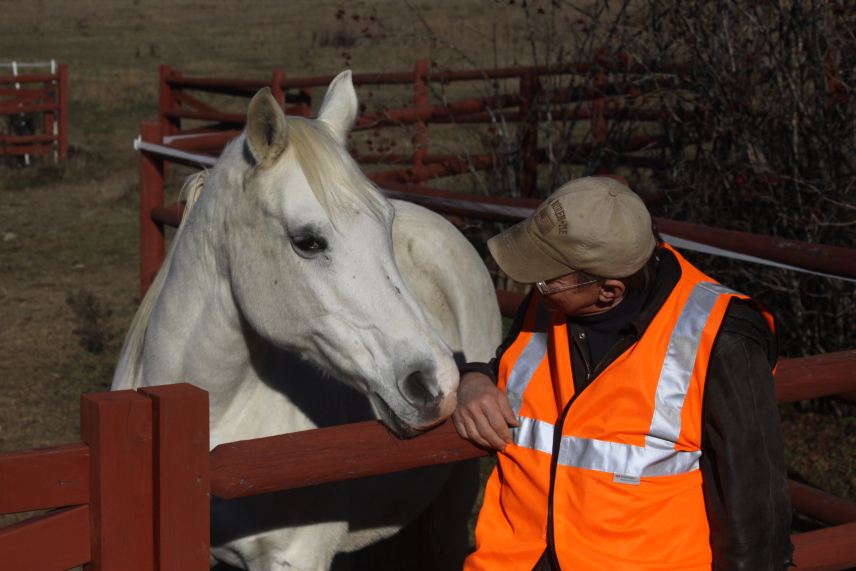
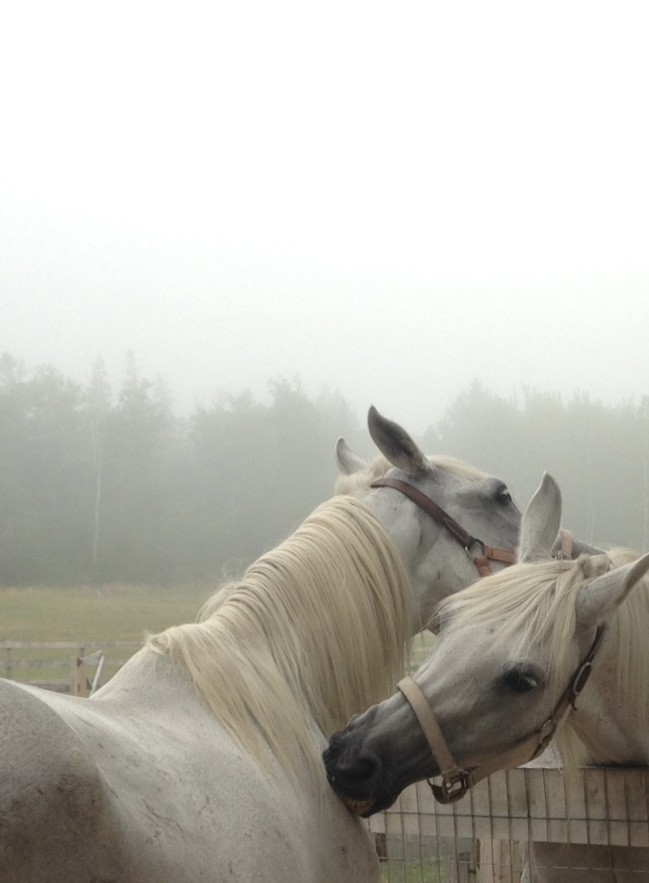

“I don’t even ride, I give aging horses, mostly Arabians, a retirement home to live out their lives. The two white horses is a picture from my home on the coast that is now where my ex-wife lives, both of them passed away. The paint horse and the chestnut Arabian are my current horses up in Caribou. I got involved with horses because of my ex who was a horse woman, and I have this magical relationship with horses, just like I attract cats. lol
“Horses are magical… you can’t be tense in a 10’ x 10‘ stall with [a] thousand pound animal of prey with reflexes faster than you. You have to leave your stress behind entering/sharing space with them. People sometimes ask me if it isn’t expensive to have horses, and I’d say I don’t need to go to a gym because of all the work I do with them and for them, and it’s cheaper than psychotherapy.”
Questions and Answers:
(1) What is the book (or books) you’ve given most as a gift, and why? Or what are one to three books that have greatly influenced your life and/or medical practice?
The book I’ve gifted the most is The Daily Stoic by Ryan Holiday. I got into Stoicism a few years back, and this book just clicked — it’s structured with short daily entries that blend ancient wisdom with practical application, and it became a daily ritual for me during a tough stretch of burnout. I still read it every morning before clinic. One of my colleagues picked up the habit too and finds it just as grounding. Another one I’m really into right now is The Courage to Be Disliked, which dives into Adlerian philosophy — super helpful in navigating challenging dynamics and relationships. And How to Decide by Annie Duke is excellent for sharpening decision-making. It’s more of a workbook, and I’ve found it really valuable for getting unstuck, both personally and professionally.
(2) What advice would you give to a smart, driven student or trainee about to enter the “real world” of taking care of patients? What advice should they ignore?
Three days a week in clinic is the sweet spot for primary care. Four days seems doable on paper but wears you down. Two days often just compresses the stress. Ignore anyone who says part-time isn’t an option — I didn’t think it was either until my wife nudged me to try it, and it ended up being one of the best decisions I’ve made. It gave me time back — to co-found Medicine Forward, dive into projects I care about, and just live a healthier, more balanced life.
(3) What are bad recommendations you hear in your profession or area of expertise?
One persistent and harmful misconception is that family medicine or primary care is somehow a “lesser” specialty — that it’s a backup for people who didn’t match into something else, or that it lacks status or pay. I couldn’t disagree more. Some of the smartest, most intellectually curious people I know are in primary care. Being a great generalist takes real brainpower and adaptability. I’ve been in rural primary care for 12 years now, and I love it. Sure, I could’ve gone into something with more prestige or a bigger paycheck, but this is the work that fills my cup. I knew I wanted to do this before med school, and I’m glad I didn’t let the competitive culture or peer pressure steer me away from it. Choose what speaks to your heart — it’s your life.
(4) What qualities do you appreciate and admire most in medical colleagues? Or in others, in general?
Compassion and kindness, hands down. I think of a nurse I work with who once found a bed on Facebook Marketplace, picked it up herself, and delivered it to a patient who didn’t have a comfortable place to sleep — all on her own dime and time. That kind of quiet generosity is contagious and makes the whole system better.
(5) What wrong assumptions do people often make about you (this could be patients, colleagues, family members, or people, in general)?
People often assume I’m more extroverted than I really am. I’m actually a classic introvert — I enjoy people, but social interactions drain me. I’ve learned to be good at being social, but it definitely takes energy.
(6) What matters to you now that didn’t used to, or vice versa? Why?
Time. I’m much more intentional about how I spend it — and more willing to outsource or let go of tasks that aren’t a good use of it. I used to be hesitant to spend money on convenience, but now I see time as the more limited and precious resource. If something’s not worth the time investment, I pass.
Questions and Answers:
(1) What is the book (or books) you’ve given most as a gift, and why? Or what are one to three books that have greatly influenced your life and/or practice?
The book that immediately comes to mind is “Unbroken” by Laura Hillenbrand. Speaking to the incredible resilience of the human spirit. It has stayed with me longer than perhaps any other book I have read.
(2) What advice would you give to a smart, driven student or trainee about to enter the “real world” of taking care of patients? What advice should they ignore?
As Dr. Kathy Stepien says, “Everyone wins when physicians are well.”
“Put on your own oxygen mask first” is not just a trite saying, or restricted to airplane wisdom. You genuinely do need to take care of your own basic physical and emotional needs to resource yourself in order to care for others without feeling depleted. Ask for help! It is truly a sign of strength. You are never alone!
Ignore anyone who tells you to “Put your head down and just keep going.” Lift your head up! Depending on the circumstance, speak out when you see things that should be changed, and/or think about what you DO have control over, and emphasize that to support yourself.
(3) What are bad recommendations you hear in your profession or area of expertise?
I’ve heard the phrase, “suck it up, buttercup” is frequently used. That is poor advice! It does not lend you to feeling a sense of agency. When you feel stuck, talk to someone; a trusted colleague, mentor, clergy, therapist, relative, friend, or coach. There is ALWAYS a path forward!
(4) What qualities do you appreciate and admire most in colleagues? Or in others, in general?
Honesty, humor, integrity, kindness, trustworthiness, and being a team player are a few that immediately come to mind.
(5) What wrong assumptions do people often make about you (this could be doctors, colleagues, family members, or people, in general)?
That I was smiling and positive the whole time through my three recent cancer journeys. I may have frequently appeared that way to others on the outside, though I’ve had some struggles on the inside for sure!
(6) What matters to you now that didn’t used to, or vice versa? Why?
I’ve said that before everything happened to me, I wasn’t walking around thinking about doctors any more than they were walking around thinking about physical therapists (I’m a PT) – until you need one! Now, doctors and their wellbeing matter a tremendous amount to me! I need doctors to keep me alive, I am so grateful to them, and they are always in my heart! .
Questions and Answers:
(1) What is the book (or books) you’ve given most as a gift, and why? Or what are one to three books that have greatly influenced your life and/or practice?
Given – Anything by Lawrence Durrell, Histories of San Francisco or Gold Country.
Influenced by – Marcus Aurelius, Epictetus.
(2) What advice would you give to a smart, driven student or trainee about to enter the “real world” of taking care of patients? What advice should they ignore?
Good advice –
Do on the job training early in your career.
Developing your emotional intelligence is very important.
Pay more attention to real world outcomes, rather than pleasing or popular philosophies.
Be willing to change your mind.
When you find something new that creates better outcomes, be willing to let go of well loved parts of your education, perhaps given to you by well loved mentors.
Consider how important it is to embody what you teach.
Bad advice –
Completing a certain course of study, means you are qualified to do something well, or safely in the real world.
Try lowering your prices.
Try… (some dishonest, deceptive or unethical thing)
(3) What are bad recommendations you hear in your profession or area of expertise?
Almost all advice given in my field is very bad, because it is not qualified. It is out of context. Besides being poorly trained, the person giving the advice almost never has any knowledge concerning the person asking. That is one of the big reasons people in this very rich country get less healthy and less fit every year. A piece of advice that might be ideal in a particular situation, can be disastrous when applied generally. That said, here are some of the worst for people trying to get healthy and fit:
You need to work your core.
Everyone needs to stretch more.
Exercise always goes better with a trainer.
You need to start counting calories.
You have to work through the pain.
Get one of the staff at your gym to check your form.
(4) What qualities do you appreciate and admire most in colleagues? Or in others, in general?
The ability to deliver bad news or unwelcome truth in ways that make people happy, hopeful and inspired, rather than sad, angry or fearful.
The ability to simplify complex concepts and principles so people can use them to improve their lives.
The ability to quickly discern what is important in a problem or situation, and what is not.
(5) What wrong assumptions do people often make about you (this could be doctors, colleagues, family members, or people, in general)?
They equate me and my organization with most others in my field. This is a mistake if you look at the results I have guided my students to, versus typical results achieved on the American fitness landscape. People are to be forgiven for this misconception. They expect to see more of what they have always seen.
(6) What matters to you now that didn’t used to, or vice versa? Why?
The importance of business acumen. Professionals in the health, fitness or athletic fields can find themselves providing excellent or even superior outcomes, and yet through lack of confidence or lack of wisdom in commerce, they are extremely overworked and underpaid. Well rested professionals, operating with their heads above water, can make the choice to provide better quality service. I believe many do that when they can.


Questions and Answers:
(1) What is the book (or books) you’ve given most as a gift, and why? Or what are one to three books that have greatly influenced your life?
The Prime of Miss Jean Brodie is the book I’ve gifted most often. In fact, only last week when I visited my old high school to talk to the Advanced Higher English class (17-year-olds who are studying university-level English) I gave each of the pupils a copy of it. It’s a darkly funny novel by the acclaimed Scottish writer, Muriel Spark, that brilliantly explores themes of innocence and betrayal. I fell in love with it as a teenager and give it to others in the hope that they might, too.
(2) What advice would you give to a smart, driven student or trainee about to enter the “real world” of taking care of patients? What advice should they ignore?
I would ask that they imagine each patient could be a member of their own family… an aunt or uncle, a younger cousin, a grandparent… and then commit themselves to treating each person in the way they would want a family member to be treated. I would ask that they see each person as a unique individual with a fascinating life story who is in this very moment rendered vulnerable by illness.
(3) What are bad recommendations you hear in your profession or area of expertise?
Any advice around the success of the individual over that of community; ambition over integrity; career over kindness.
(4) What qualities do you appreciate and admire most in a doctor? Or in others, in general?
As someone with multiple sclerosis who has also experienced cancer, I appreciate when a clinician is kind, looks into my face, acknowledges me, takes time to know who I am. I know what it is to receive treatment rather than care and I admire doctors who understand this difference and choose to provide the latter.
(5) What wrong assumptions do others often make about you (this could be doctors, colleagues, family members, or people, in general)?
That I am my disease (or diseases). That I am simply a patient. That I am just their 2pm appointment. Rather than (at various times) a teacher, someone who has run the global HR function of a multinational, a novelist with a PhD, a human person who loves her family, friends, nature, animals and a perfectly placed apostrophe.
(6) What matters to you now that didn’t used to, or vice versa? Why?
The feeling of carpet under my toes, the sun setting over a Scottish loch, ancient fir trees, birdsong, eyebrows and eye lashes. Serious illness, first MS and then HER2+ breast cancer, has taught me to appreciate each of these things (and many more) and to try, as much as possible, to live in the moment.
Questions and Answers:
(1) What is the book (or books) you’ve given most as a gift, and why? Or what are one to three books that have greatly influenced your life and/or medical practice?
Being Mortal by Atul Gawande. I didn’t think it would change my thinking much since I’d read it after being a doctor for well over a decade but it was incredibly thought provoking and eye opening to read his perspective, and the literature he cites, on so many fundamental problems in our health care system. I also love Cutting for Stone by Abraham Verghese. It is incredibly impactful in its descriptions of the doctor-patient relationship.
(2) What advice would you give to a smart, driven student or trainee about to enter the “real world” of taking care of patients? What advice should they ignore?
Ignore any advice about what your career ‘should’ be. Many well meaning people will advise you that you should follow their path. It’s worth considering all advice but much of it will not be relevant to you. There are countless ways to carve out the niche in medicine that is most meaningful to you, and countless ways to change it over time as your professional and personal goals/priorities change. My biggest piece of advice is to be intentional about remembering that being a physician is a huge privilege and to guard against cynicism. We have endless choices, still a great deal of autonomy compared to other professions despite the many flaws in our health care system, and it’s essentially a given that we will have a positive impact every single day.
(3) What are bad recommendations you hear in your profession or area of expertise?
My area of expertise is medical education. One of the biggest concerns I have is poor role modeling, ie when attendings role model cynicism, paternalism toward patients especially those who are most vulnerable, use denigrating language to describe patients, etc. For bad recommendations specifically, other than the above, I’m always disappointed when senior doctors advise junior doctors that they need to make career decisions based on money or lifestyle. Both of those things matter but we will always be paid enough and neither of those things are nearly as impactful for wellness over decades than practicing the type of medicine that you find most fulfilling. We have the privilege of being well-paid enough that if we choose a specialty that has more demanding hours, we can choose to work part time etc to allow us to practice the medicine that we want to in a way that also allows an individual to achieve the work-life balance that we want/need.
(4) What qualities do you appreciate and admire most in medical colleagues? Or in others, in general?
People who remember what matters, and don’t get bogged down in selfishness, cynicism, self-pity, malaise. These people are both the happiest and have the most positive impact.
(5) What wrong assumptions do people often make about you (this could be patients, colleagues, family members, or people, in general)?
I haven’t thought about this in a while. I’m grateful to be in an area of medicine that is at least 50% women, so especially as I’ve gotten older, it’s uncommon to feel like I experience much gender bias. It does happen at times in higher stakes situations with some male colleagues who may not know me as well. Once a department chair said to me ‘you present yourself as nice, but you’re not a pushover.’ To which I responded, ‘I am nice, and I’m not a pushover.’ So I guess being warm and empathetic can lead to the perception of weakness at times. But I find the best leaders can straddle both depending on what the situation warrants. And I find that if your baseline is overly assertive or aggressive, when you do need to fight battles, sometimes you can be taken less seriously because you’re always crying wolf.
(6) What matters to you now that didn’t used to, or vice versa? Why?
It doesn’t matter to me anymore if most people like me. I have learned it will never happen, and if I try, I still won’t succeed and I will risk undermining my personal or professional goals in the process. Progress usually can’t be achieved with complete consensus and accepting that goes a long way in optimizing both professional progress and personal well being.
Questions and Answers:
(1) What is the book (or books) you’ve given most as a gift, and why? Or what are one to three books that have greatly influenced your life and/or medical practice?
The Alchemist
Tattoos on the Heart: The Power of Boundless Compassion
Human(Kind): How Reclaiming Human Worth and Embracing Radical Kindness Will Bring Us Back Together
I recently purchased this for my entire team of 55 people: When We Walk By: Forgotten Humanity, Broken Systems, and the Role We Can Each Play in Ending Homelessness in America
(2) What advice would you give to a smart, driven student or trainee about to enter the “real world” of taking care of patients? What advice should they ignore?
Advice— A poem by an unknown author that I have held onto since I was about 12 years old-
Believe in yourself and always stand tall
Those who have doubts are those that will fall
Enjoy what you do and remember to smile
It is the hard work and effort that make it worthwhile
Remain focused on what you wish to achieve
But just remember to always believe
Advice to ignore— anything that doesn’t sound like the poem above
(3) What are bad recommendations you hear in your profession or area of expertise?
I don’t hear the bad ones and that’s probably why I’ve created my own path.
(4) What qualities do you appreciate and admire most in medical colleagues? Or in others, in general?
In general- kindness
(5) What wrong assumptions do people often make about you (this could be patients, colleagues, family members, or people, in general)?
Probably many, but I try not to pay much attention to what others are thinking or saying about me.
(6) What matters to you now that didn’t used to, or vice versa? Why?
What has always mattered to me is family. Over time family has come to include not only those who gave me life but those who shaped who I am and why I do what I do.
Questions and Answers:
(1) What is the book (or books) you’ve given most as a gift, and why? Or what are one to three books that have greatly influenced your life and/or medical practice?
The book I’ve given most often as a gift is Devotions: The Selected Poems of Mary Oliver. Poetry is not for everyone, but I think Mary Oliver is. The English Patient by Michael Ondaatje is at least partly responsible for bringing me and my wife together over 15 years ago. I would offer Charlotte’s Web by E. B. White as my Platonic Ideal of a book.
(2) What advice would you give to a smart, driven student or trainee about to enter the “real world” of taking care of patients? What advice should they ignore?
I would remind them that they came from the so-called real world and that they should remember how to navigate it, alongside their patients, so long as they’re not disoriented by the funhouse mirror world of corporate medicine.
They should ignore any advice that encourages them to think like businesspersons or to approach medicine in a transactional way.
(3) What are bad recommendations you hear in your profession or area of expertise?
Most of us have a bias that privileges medical interventions, mostly in the form of prescription medications, over behavior and lifestyle changes for the treatment of chronic health problems. It’s ironic and perhaps even hypocritical because the first thing I do when my blood pressure is elevated is try to consume less salt.
(4) What qualities do you appreciate and admire most in medical colleagues? Or in others, in general?
More than anything I admire people who don’t fall for cynicism and whose default setting, no matter the circumstances, is kindness.
(5) What wrong assumptions do people often make about you (this could be patients, colleagues, family members, or people, in general)?
As I grow older and more aware of my flaws, I realize I’ve benefitted from quite a halo effect around my interpersonal skills. People automatically assume that because I’m a good small group teacher that I know how to oversee a curriculum, or that because I can problem solve in my day to day clinical practice that I would be a good administrator. Unfortunately, a lot of my skills don’t seem to scale!
(6) What matters to you now that didn’t used to, or vice versa? Why?
Family is an obvious answer but I can’t think of anything more true.
Questions and Answers:
(1) What is the book (or books) you’ve given most as a gift, and why? Or what are one to three books that have greatly influenced your life and/or medical practice?
My Own Country by Abraham Verghese. A truly beautiful exploration of difference in a pandemic.
Arrowsmith by Sinclair Lews. Oldie for sure, but questions about the purpose of medicine.
City of Thieves by David Benioff. Coming of age in the face of adversity.
(2) What advice would you give to a smart, driven student or trainee about to enter the “real world” of taking care of patients? What advice should they ignore?
Human life is incredibly resilient. Human life is incredibly fragile.
Learn not only to tolerate, but actively to embrace ambiguity.
Always keep learning in some area. (For example, I continue to take piano lessons at 71. At 55 I took flying lessons. Etc. Putting yourself in a position of incompetence to learn from someone more competent.)
(3) What are bad recommendations you hear in your profession or area of expertise?
Be tough.
(4) What qualities do you appreciate and admire most in medical colleagues? Or in others, in general?
Honesty. Responsiveness. Empathy.
(5) What wrong assumptions do people often make about you (this could be patients, colleagues, family members, or people, in general)?
That what I (and physicians in general) do is usually based on knowing what the right answer is, rather than making the best guess in a position of lack of knowledge.
(6) What matters to you now that didn’t used to, or vice versa?
I no longer worry (as much) about what other people think.
Questions and Answers:
(1) What is the book (or books) you’ve given most as a gift, and why? Or what are one to three books that have greatly influenced your life and/or medical practice?
a. Le Petit Prince
b. The Impossible Will Take a Little While
c. Envisioning Real Utopias
d. Users’ Guides to the Medical Literature
e. God’s Hotel
(2) What advice would you give to a smart, driven student or trainee about to enter the “real world” of taking care of patients? What advice should they ignore?
Advice early on: hold on to your heart (if you go into healthcare to care) and become the most competent clinician you can be; later on: cultivate care (self, team, patients, community, environment), be curious, unhurried, responsive, and responsible.
Advice to ignore: equanimity (interpreted as distance from each patient)
(3) What are bad recommendations you hear in your profession or area of expertise?
Follow the guidelines “just in case…”
“The customer is always right.”
“Have the patient find out.”
(4) What qualities do you appreciate and admire most in medical colleagues? Or in others, in general?
Generosity, integrity, humor, collaborative, insightful, committed to common good, responsible user of limited resources and of powerful means
(5) What wrong assumptions do people often make about you (this could be patients, colleagues, family members, or people, in general)?
That I am too full of myself to care or too busy to have time for them, that I enjoy causing distress by being overly critical
(6) What matters to you now that didn’t used to, or vice versa?
I used to care about getting papers out, seeing my name on the byline, getting followers in social media, making sure everyone had a positive view of myself and agree with all my ideas. Now I care about enabling others and making sure that we leave a world that is a bit more caring than the one we got.
Questions and Answers:
(1) What is the book (or books) you’ve given most as a gift, and why? Or what are one to three books that have greatly influenced your life and/or medical practice?
Elderhood by Louise Aronson which changed my views on aging
Easy Beauty by Chloé Cooper Jones which changed my views on disability
I Can’t Save You which is a great physician memoir by Anthony Chin-Quee
(2) What advice would you give to a smart, driven student or trainee about to enter the “real world” of taking care of patients? What advice should they ignore?
If you are worried about burnout and sustainability in your medical career, consider seeking a job where you have maximum flexibility and autonomy/agency (they exist).
Follow your curiosity, learn voraciously…this is the path to excellence.
Learn to tolerate and even embrace uncertainty.
(3) What are bad recommendations you hear in your profession or area of expertise?
“Don’t leave academia because if you do you’ll never be able to come back.”
(It’s OK to leave academia, and it’s possible to come back.)
(4) What qualities do you appreciate and admire most in medical colleagues? Or in others, in general?
Good work ethic
Curiosity
Uncertainty tolerance
A sense of humor
Maybe even a little mischief
(5) What wrong assumptions do people often make about you (this could be patients, colleagues, family members, or people, in general)?
People used to say I look like my mother but in fact I am adopted
(6) What matters to you now that didn’t used to, or vice versa? Why?
Liberal democracy and freedom
I used to take this for granted
But lately I’ve realized it’s NOT a given
We must protect and preserve it from attacks on both sides
Questions and Answers:
(1) What is the book (or books) you’ve given most as a gift, and why? Or what are one to three books that have greatly influenced your life and/or medical practice?
Fundamentals of Medical Practice Management
(2) What advice would you give to a smart, driven student or trainee about to enter the “real world” of taking care of patients? What advice should they ignore?
Don’t listen to people who tell you it’s too stressful to start your own practice and tell you to just join a group instead. Don’t take out a big loan when building the business – start lean.
(3) What are bad recommendations you hear in your profession or area of expertise?
Similar to above
(4) What qualities do you appreciate and admire most in medical colleagues? Or in others, in general?
Dedication. Putting patients first.
(5) What wrong assumptions do people often make about you (this could be patients, colleagues, family members, or people, in general)?
That doctors are rich.
(6) What matters to you now that didn’t used to, or vice versa? Why?
Finding time for relaxation and vacation.
Questions and Answers:
(1) What is the book (or books) you’ve given most as a gift, and why? Or what are one to three books that have greatly influenced your life and/or practice?
I rarely give books as a gift because we all have different opinions about what speaks to us. One of the books that greatly influenced my trauma work was Trauma and Recovery by Judith Herman, MD. Additionally, Bessel van der kolk, MD. The Body Keeps the Score is a must read. It would be hard to choose just one book by Irvin Yalom, MD that has influenced my counseling but The Gift of Therapy is one of my favorites. Personally, and professionally Man’s Search for Meaning, was life changing.
(2) What advice would you give to a smart, driven student or trainee about to enter the “real world” of taking care of patients? What advice should they ignore?
I would stress the importance of caring for self. Seriously, start this very moment. Do something each day that brings you joy, peace, contentment. Make breakfast, hold your child, cat, dog, loved one, meditate, set boundaries. Have a five minute dance party, sing in the car. Breathe, call a friend, be vulnerable, exercise, binge watch your favorite show, take a nap, laugh. You are in this for the long haul and you will be more compassionate, energetic and sustainable if you do something each day for yourself. Regarding what to ignore, I think part of growth is figuring out what information is useful.
(3) What are bad recommendations you hear in your profession or area of expertise?
This is a tough one, as I generally do not hear “bad” recommendations. But I would say engaging in behavior that violates our code of ethics. I think this is very important in our field.
(4) What qualities do you appreciate and admire most in medical colleagues? Or in others, in general?
One of my favorite positions was working in an integrative care environment. What I admire most are colleagues who are collaborative, passionate and demonstrate a willingness to engage in active listening regardless of discipline.
(5) What wrong assumptions do people often make about you (this could be patients, doctors, colleagues, family members, or people, in general)?
That I am problem free. Our coping skill set might look different, but we all face problems, hardship, loss.
(6) What matters to you now that didn’t used to, or vice versa? Why?
The ability (and willingness) to say no without guilt. I am still a work in progress.
Questions and Answers:
Transcribed from audio, minor edits made for clarity.
(1) What is the book (or books) you’ve given most as a gift, and why? Or what are one to three books that have greatly influenced your life and/or medical practice?
If I had to choose one book that I give to people it’s Annie Lamott’s Bird by Bird. It’s a way to live and be in the world as an academic physician. It’s a book that I think is particularly relevant if you want to write and you’re not sure how to get started.
(2) What advice would you give to a smart, driven student or trainee about to enter the “real world” of taking care of patients? What advice should they ignore?
I think the most important piece of advice is to really enjoy the stories and the relationships you build with patients. I think that the medicine is, at the end of the day, relatively rote, and if you’re smart you’ll figure it out. I think that you have to… listen carefully to what the patient is really telling you. I also think that the point is to realize that you’re not going to be the right doctor for everybody, and that’s okay. And that you have to figure out the patients that you work best with because it is a relationship.
(3) What are bad recommendations you hear in your profession or area of expertise?
I’m not sure about bad recommendations. I think that people often think that because I’m a palliative doctor that it’s all really sad. While it is sad, I think that for me what makes it worthwhile is that you see people really care and love each other, and you see how people respond to stressful encounters. I think a lot of people are burned out about medicine because of the amount of paperwork, and I don’t disagree with that, I just think you have some choice about how you want to spend your time and trying to write notes like you’re writing a novel is probably not a good use of your time or energy.
(4) What qualities do you appreciate and admire most in medical colleagues? Or in others, in general?
I appreciate in my colleagues honesty and straight forwardness. I also think that, particularly in palliative care, we often try to take care of everyone, and I think people should take care of themselves and trust that other people can take care of themselves.
(5) What wrong assumptions do people often make about you (this could be patients, colleagues, family members, or people, in general)?
I’m not sure about the assumptions that people make about me. They’re probably right. Because of who I am, I sometimes find it easier to be a doctor and an academician than a regular person in relationships and that probably has more to do with control. I think the thing I would recommend to people is that often we get in our own way and that if you haven’t seen a therapist it is often a good idea to help figure out what you’re about and how you can be more effective.
(6) What matters to you now that didn’t used to, or vice versa? Why?
What matters most to me at this point is really having relationships with my patients and helping mentor people. What doesn’t matter as much, and it probably mattered a lot at the beginning, was getting stuff done and getting things published. I don’t care if I publish them. I still have things that I want to say, but I really care about helping other people get them done and publish them.
Timemarks
00:00 – What is the book (or books) you’ve given most as a gift, and why? Or what are one to three books that have greatly influenced your life and/or medical practice?
02:00 – What advice would you give to a smart, driven student or trainee about to enter the “real world” of taking care of patients? What advice should they ignore?
18:30 – What are bad recommendations you hear in your profession or area of expertise?
19:55 – What qualities do you appreciate and admire most in medical colleagues? Or in others, in general?
25:09 – What wrong assumptions do people often make about you (this could be patients, colleagues, family members, or people, in general)?
29:19 – What matters to you now that didn’t used to, or vice versa? Why?
*Identifiers have been censored in the audio.
Questions and Answers:
(1) What is the book (or books) you’ve given most as a gift, and why? Or what are one to three books that have greatly influenced your life and/or medical practice?
I have not given this book very often, but I have wanted to. I have always felt that the book by Abraham Verghese, “My Own Country,” is one of the best and most powerful testaments of what it is like to be a committed doctor. It is the late-20th century version of Sinclair Lewis’s “Arrowsmith.” What I like, and hope others can appreciate, is the personal stories embedded in the book and the narrative showing both the power and limitations of being a physician.
(2) What advice would you give to a smart, driven student or trainee about to enter the “real world” of taking care of patients? What advice should they ignore?
That to take care of patients, and to do it well, involves sacrifice. And to make sacrifice(s) you need to create a meaningful and fun life for yourself — that includes family, children or pets, and activities outside of medicine that give you joy. It sounds obvious and straightforward, but some physicians don’t realize how much sacrifice is required in the job of being a caring physician and then do not nourish themselves with activities (as mentioned) that provide the “fuel” for future sacrifice.
(3) What are bad recommendations you hear in your profession or area of expertise?
I think it’s a grave mistake to seek security and income as your top concern in medicine. You need to choose a field and activity mix that makes you happy, regardless of the financial outcomes.
(4) What qualities do you appreciate and admire most in medical colleagues? Or in others, in general?
The most important thing is truly caring about your patients, treating each patient regardless of background or likability as a member of your family. I admire physicians who can do that.
(5) What wrong assumptions do people often make about you (this could be patients, colleagues, family members, or people, in general)?
I have observed that the most expert scientists and clinicians have the gift of simplifying things and explanations so that they can be understood by almost anyone. It is a wrong assumption that these simplifications reflect a lack of knowledge or sophistication; to the contrary, it is the expert who can simplify. The surgeon who takes a long time to do a straightforward operation is a bad surgeon. “Experts take less time” not more. Similarly with words (rather than actions), the clinician or teacher who can get their point across with simple language and analogies, is a great clinician or teacher.
(6) What matters to you now that didn’t used to, or vice versa? Why?
I value gratitude more than I used to. In fact, I am retracing my life to some degree and trying to show gratitude to people/places that I previously took for granted. I am less impressed by formal credentials (advanced degrees or prestigious training — although I have both!) than I used to be.
Transcribed from audio with added timemarks. Minor edits made for clarity.
0:00
(1) What is the book (or books) you’ve given most as a gift, and why? Or what are one to three books that have greatly influenced your life and/or medical practice?
One of the books that I love when it comes to entrepreneurship is Dan Charnas’ Work Clean. That book was a recommendation by a fellow DPC [direct primary care] doctor, Dr. Jill Schier, and it was definitely a game changer because as a person who opened as a micropractice, telemedicine model, home visit model in Year One of my DPC, it really helped me, who is at baseline not the most organized person, to think about systemization and automations and efficiency. Work Clean is one of my favorite books that I found during my DPC journey.
In terms of other books that have influenced my life, … I’m a person who believes that I can pull from anything and any experience that I’ve ever been through. So there are books that are not necessarily life-changing, but things that I enjoy picking up are definitely going to be books that make me think, make me not want to stop reading, make me not want to go to the bathroom because I want to keep reading. Harry Potter is always a favorite series of mine that … I did not want to stop reading that series. Life of Pi is another great book because at the end I remember myself arguing with the book itself to say, “No, that’s not what happened!” Another book that I really love is A History of God by Karen Armstrong because it is talking about Judaism, Christianity and Islam all in one book. We were reading this actually in high school [as] part of [the] humanities and international studies program, and it definitely helped me as a young person realize that there is more beyond the end of your nose. And seeing different perspectives from the world and understanding those perspectives through listening, and listening via audio book or reading, definitely helped me career-wise in terms of choosing to be a primary care physician.
02:35
(2) What advice would you give to a smart, driven student or trainee about to enter the “real world” of taking care of patients? What advice should they ignore?
When it comes to number two, if I were talking to somebody who was a driven student or trainee in medicine, and I was listening to them and giving them advice on what they should ignore, I think that a big piece of advice as a direct primary care physician now, is that private primary care practice is not an extinct being. Primary care practice physicians are still hanging their shingles, and they are hanging their shingles in a better way than we were able to for the last… how many decades. Primary care practice owners who are independent of a corporation are very frequently laughed at. The idea is laughed at… the idea is preposterous. I have heard those presentations and those fallacies during didactics, during talks with attendings. And I am proud to say that there is a whole movement of thousands of doctors and that spans beyond primary care… also specialty care, surgical specialties even, that are able to deliver care in a private setting and not have to rely on an insurance-based corporate-driven system.
04:04
(3) What are bad recommendations you hear in your profession or area of expertise?
In terms of number three… so I think this is interesting, because as a DPC doctor I hear lots of people doing different things, given that I interview DPC doctors weekly on my podcast. But when it comes to bad recommendations I definitely would say that, in the entrepreneurial physician space, people who are talking about… there is only one way to do something. I think that puts a person in a dangerous spot. It’s like, if you’re taking care of a person with hypertension, there is a standard of care, there is an algorithm you can use, but there are also cultural influences on this person’s life, there are also, you know, professional influences in a person’s life. Do they work night hours, day hours? So, I think that in terms of overall, whether it be entrepreneurial or just looking at a physician’s role in medicine, just the idea that there is one way to do things, is a piece of advice that can be quite dangerous.
05:25
(4) What qualities do you appreciate and admire most in medical colleagues? Or in others, in general?
In terms of qualities that I appreciate and admire in my medical colleagues, through out the years I think that one of the things I admire is somebody who is willing to teach. I am very much in contact with my former attendings, who were very much open to treating me as a colleague. And I still cannot call them by their first names to this day. That is just a thing that I hold.
I very much respect and admire my teachers, and I am grateful for them. Even though they treated me as a colleague, I still know that they are more seasoned physicians, but I always admired and respected those people who would be willing to talk to me like, “You’re going to be in my shoes someday, and I need you to know my perspective. And I need you to give me your perspective because I’m just a few years older than you, but that doesn’t mean I know everything.” So I think that humility, as part of being a teacher, has been really incredible, and I’m very grateful that especially family physicians have been great mentors in my life because of those characteristics.
06:46
(5) What wrong assumptions do people often make about you (this could be patients, colleagues, family members, or people, in general)?
And then five, assumptions… so it’s funny when we talk about assumptions that people make of you because a few years back there was the meme of: what people think I do, what social media thinks I do, what I actually do. And if you’ve seen those, you know what I’m talking about. But when it comes to the things that I do, it’s very interesting as a family physician because a lot of people think that all I do is refer… refer to a doctor who is a specialist in the heart or the lungs or whatnot. And absolutely, I’m not an expert in everything, I’m a general practitioner, but at the same time, I think there is a lot of awe in, “Oh wow, you can actually spend a lot of time with patients, and wow, you have relationships with patients over time, and wow, you’re able to advocate for them in the healthcare system. I didn’t know a doctor could do that.” So I think that the role of a family medicine physician, because I’m a DPC family physician, is very different than I could ever be as a family physician in an insurance-based model. For me, I think that my family members in my immediate family are definitely less… they’ve heard my journey through out, so they’re not the people who would be assuming that all I do is refer, but the general culture of our country is that a family physician is just a place that you go to, to get referred to see the “real” doctor.
08:28
(6) What matters to you now that didn’t used to, or vice versa? Why?
And then… in terms of six, what matters to you now that didn’t used to… so six is very interesting. When I was thinking about six earlier, in terms of my perspective on life now versus when I was a fee-for-service employed physician, I am much more alive as a person than I was ever as an employee. As a self-employed entrepreneur your motivations are different because you are creating the means by which you make an income, you are creating the means by which you have a retirement plan, a schedule to be able to raise your kids. I think that when I, in my experience, in my personal experience, was told you are going to be fired unless you sign a contract that is completely incompatible with sustainability as a family physician going into practice… continuing practice… that experience made me think differently about… wow, a family physician is actually not valued by a corporation. A family physician is just a warm body to process codes to get the person to the real doctor. And that is something that I only recognized when I got that letter, when I was threatened to be fired.
It definitely helps that I was pregnant while I got that letter, and so my motivations to do a different model of care—because I had learned about DPC before I got this letter—were no longer followed by thoughts about DPC as a possibility in the future. My thoughts about DPC were then followed by actions to leave corporate medicine and open my own DPC. So I will definitely say that, in terms of what matters to me now, is to be in a place where I am valued and also where I am able to create, to be creative, and to be able to have autonomy. So those are the things that I value now because as a result, I’m able to be at my kids’ events, I’m able to go to a family reunion for a week. I’m able to, you know, choose my… the things I need, the software, the sass, the different things that I need to be able to work towards my goals rather than showing up to work and doing another Medicare wellness physical where I have to ask somebody if they wear their seatbelt. That does not bring me joy. And living my life now with, “Does this bring me joy?” as an intermittent place to check in with myself, asking … that as a reflection question to see, “Is … what I’m doing right now in alignment with my future?” That is something that is different in my life now, as an entrepreneur and physician, versus when I was “only a physician.”
So I hope that helps, and I don’t know if it will send, but hopefully it will! Bye!!
Questions and Answers:
(1) What is the book (or books) you’ve given most as a gift, and why? Or what are one to three books that have greatly influenced your life and/or medical practice?
The book I’ve based my life on is 7 Habits of Highly Effective People by Stephen Covey. In this book, Covey (now deceased) talks about 7 principles for living an effective life, but really, they are principles for living a meaningful life. Another book I recommend everyone read is How to Win Friends and Influence People by Dale Carnegie. It really captures how to live an impactful life, one that is not about self but about others. The truth is, when we focus on others, we end up having a better life for ourselves.
In fact, I teach an undergraduate course where I recommend the following books:
– 7 Habits of Highly Effective People
– Peak: Secrets from the New Science of Expertise
– Why We Sleep: Unlocking the Power of Sleep and Dreams
– Mindset: The New Psychology of Success
– Wooden: A Lifetime of Observations and Reflections On and Off the Court
Finally, there is a book for financial health that I recommend, Get a Financial Life: Personal Finance in Your Twenties and Thirties.
(2) What advice would you give to a smart, driven student or trainee about to enter the “real world” of taking care of patients? What advice should they ignore?
I’d tell the student that prestige, awards, and titles mean nothing. Being an immigrant, my parents wanted me to pursue cardiology, but it wasn’t my passion and so I didn’t pursue it. You must stick to your passion. For most of us, we will make more than enough money in our lifetime as doctors. You must be smart and not spend money on superficial stuff like extravagant cars, watches, and clothes because if you have high monthly payments, then you’ll end up working for money rather than for the love of the job. You don’t want to be driven by the need for money. Not all jobs within a specific specialty are the same, even if they have the same title; they differ based on the specific place.
If you have a lot of school debt, sign up for an income-based repayment plan. I had my significant school debt forgiven because I worked in a nonprofit hospital for 10 years. Now I am in zero debt and feel empowered to quit my job if it’s not fun and seek a job that suits my goals.
Goals aren’t accolades, titles, or the respect of colleagues; they are about where you can make an impact. And in order to do that, you must be happy at your job.
(3) What are bad recommendations you hear in your profession or area of expertise?
Bad recommendations I hear include: publishing papers or doing scholarly work just for the sake of promotion. Promotion doesn’t matter. It really doesn’t. You need to do work that is meaningful to you, and most often, it’s work that you love and that has a positive impact on others. Another bad recommendation I hear is: “make as much money as you can.” Whoever gives that advice doesn’t realize that money doesn’t bring joy after a certain threshold. Spend less so you don’t rely on it, and empower yourself to negotiate your dream job that is not financially driven.
(4) What qualities do you appreciate and admire most in medical colleagues? Or in others, in general?
I admire colleagues who admit to mistakes, who advocate for patients, who care about students, and who care about others more than their own success. I admire colleagues who help the group achieve a goal, those who don’t think about themselves.
(5) What wrong assumptions do people often make about you (this could be patients, colleagues, family members, or people, in general)?
That I know everything. That I don’t make mistakes. That I don’t have imposter syndrome. That sometimes I don’t want to practice medicine or teach students.
(6) What matters to you now that didn’t used to, or vice versa? Why?
I don’t care about titles or awards anymore. I just care about providing the best care I can, being the best teacher I can, and being the best colleague I can be—without burning out.
Questions and Answers:
(1) What is the book (or books) you’ve given most as a gift, and why? Or what are one to three books that have greatly influenced your life?
The Bluest Eye by Toni Morrison – for me this book was a journey to find peace and acceptance in one’s self.
The Good Earth by Pearl S. Buck – Enduring unbelievable hardships. I cried a lot during the reading of this book.
Middlemarch – George Elliot – struggles to survive under restrictive societal expectations.
Important for me to share that I read these books some 20 or 25 years ago. The fact that they are listed today demonstrates their importance to me.
(2) What advice would you give to a smart, driven student or trainee about to enter the “real world” of taking care of patients? What advice should they ignore?
Get to know your patients. Actually look them in the face during the scheduled encounter. Stop looking at the computer screen. Figure a way to document that doesn’t send the message I am only interested in this billable encounter. Listen! Really Listen! Patients are counting on you. When appropriate hold their hand and don’t let go! Give a hug. Sometimes that simple act makes all the difference. Genuine caring is evident. Make sure you are in the right profession for the right reasons.
(3) What are bad recommendations you hear in your profession or area of expertise?
That people can’t recover and live meaningful, purposeful lives so there is no reason to engage in treatment.
(4) What qualities do you appreciate and admire most in colleagues? Or in others, in general?
These are rather simple but I truly appreciate human kindness and sincere interactions. We know it when we are not experiencing this. ^!^
(5) What wrong assumptions do people often make about you (this could be doctors, colleagues, family members, or people, in general)?
Because I listen and watch an individual when we first meet. Or I assess the group dynamic. I watch facial affectation, body language, use of words, engagement. There were times, not as much now, that because I wasn’t as engaging, I lacked intelligence. People, later learned that was a BIG mistake on their part. I have since learned to trust/value my emotional intelligence. It has taken me a long time to trust my initial gut instincts sooner rather than later.
(6) What matters to you now that didn’t used to, or vice versa? Why?
Genuine caring of others. Nurturing and honoring my friendships. Loyalty. Being present. Lived experiences.
 Optimized by Seraphinite Accelerator